When a child’s glasses prescription changes repeatedly, parents may wonder whether anything can be done to slow the progression. The good news is that myopia progression can often be slowed with appropriate management. Myopia Control In Children in South Edmonton aims to reduce how quickly nearsightedness progresses while a child’s eyes are still developing.
To determine the right approach to prevent myopia in child, understanding the difference between correcting vision and managing progression is an important starting point.
What Is Myopia?
Myopia, or nearsightedness, causes distant objects to appear blurry while nearby objects may remain clear. It often develops during childhood as the eyes grow. Some children experience relatively small prescription changes, while others progress more quickly.
Myopia is not simply a matter of needing stronger lenses. Higher levels of myopia are associated with increased risk of certain eye conditions later in life. Therefore, it is advised to maintain appropriate monitoring.
Why Does Early Monitoring Matter?
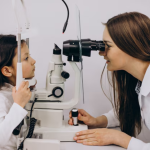
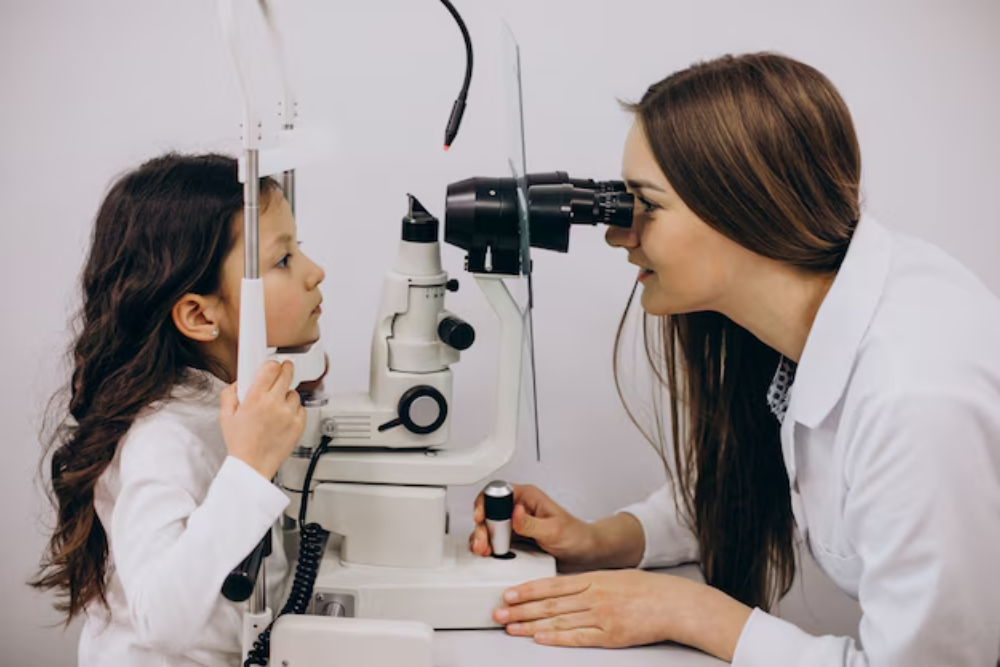
Regular eye examinations help monitor the changes in a child’s prescription and identify whether myopia is progressing. While a single prescription cannot show the full pattern, comparisons over time can help guide treatment decisions.
Myopia management may involve more frequent follow-ups than routine correction. Vision Theory Eyecare advises follow-up visits every three to six months to keep track of the progression and adjust the approach when needed.
Consulting with an optometrist in South Edmonton can help families understand their child’s individual pattern of change and whether a myopia-control option may be appropriate.
Which Treatments Can Slow Myopia?
There is no single treatment that suits every child. Options may include:
- Specialty spectacle lenses: Certain lens designs are intended to help slow myopia progression.
- Low-dose atropine: These prescription eye drops may be recommended for some children.
- Specialised soft contact lenses: Some designs are used specifically for myopia control.
The right option depends on factors such as the child’s age, prescription, progression pattern, eye health, and ability to use the treatment correctly. A professional assessment is needed before choosing an approach.
Can Myopia Be Completely Stopped?
Myopia control is not the same as curing myopia. Treatment may slow progression, but it cannot guarantee that a child’s prescription will stop changing altogether.
Parents should also be cautious about products or online advice promising to prevent or reverse myopia completely. The most useful approach is one that is evidence-informed and monitored over time.
If you are looking for an optometrist near you, ask about follow-up frequency, the options available for your child, and how progress will be measured.
Supporting Your Child’s Vision As They Grow
Myopia progression can often be slowed, but the appropriate approach depends on the child’s eyes and how their prescription changes over time.
Book an eye care appointment with Vision Theory Eyecare to discuss your child’s vision.
Frequently Asked Questions
Does spending time outdoors prevent every case of myopia?
No. Outdoor time is associated with a lower risk of developing myopia, but it cannot guarantee that a child will not become nearsighted.
Can screen time alone cause myopia?
Myopia is influenced by several factors, including genetics and visual habits. It is more useful to consider the child’s overall routine than to blame a single activity.
Can a child use myopia-control contact lenses for sports?
Some children may be suitable candidates, but the lens choice mainly depends on their eye health, maturity, hygiene habits, and ability to handle lenses safely.
Should siblings have their eyes checked if one child has myopia?
A family history of myopia can be relevant when assessing risk. Regular age-appropriate eye examinations can help identify vision changes early.
How to stop myopia progression in adult?
Adult eyes are generally no longer growing in the same way as children’s eyes, although prescriptions can still change. A new or unexpected change in adult vision should be assessed rather than automatically attributed to ordinary myopia progression.