
Vitreous Detachment in South Edmonton
Vitreous Detachment Near You
Have you noticed tiny spots or strings floating across your vision? While they might seem alarming, these floaters could be signs of vitreous detachment in South Edmonton—a common eye condition that Vision Theory Eyecare can help you understand and manage.
What is Vitreous Detachment?
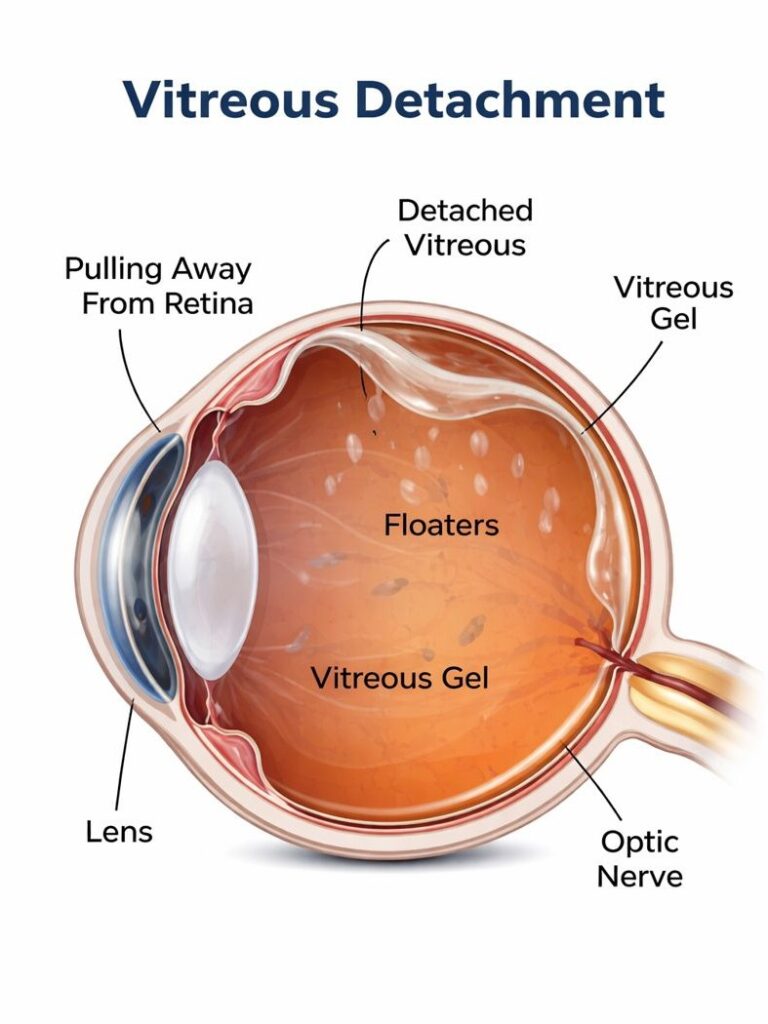
Inside your eye, there is a clear gel called the vitreous. It helps keep your eye shape and supports your retina. As we age, this gel becomes thinner and can pull away from the retina. It is called vitreous detachment near you.
It is usually not painful, but it can cause:
Sudden floaters
Flashes of light
Mild blurry vision
Common Signs You Might Notice
Small dark spots or cobweb-like shapes floating in your vision
Brief flashes of light, especially in dim lighting
A sensation like a curtain coming down over part of your vision
Sudden increase in the number of floaters
Our Comprehensive Examination Process
An optometrist in South Edmonton reviews symptoms and medical history.
Special drops safely widen pupils for internal eye evaluation.
Advanced imaging technology assesses retina and vitreous health.
Colours seem less bright.
Advantages of Early Detection
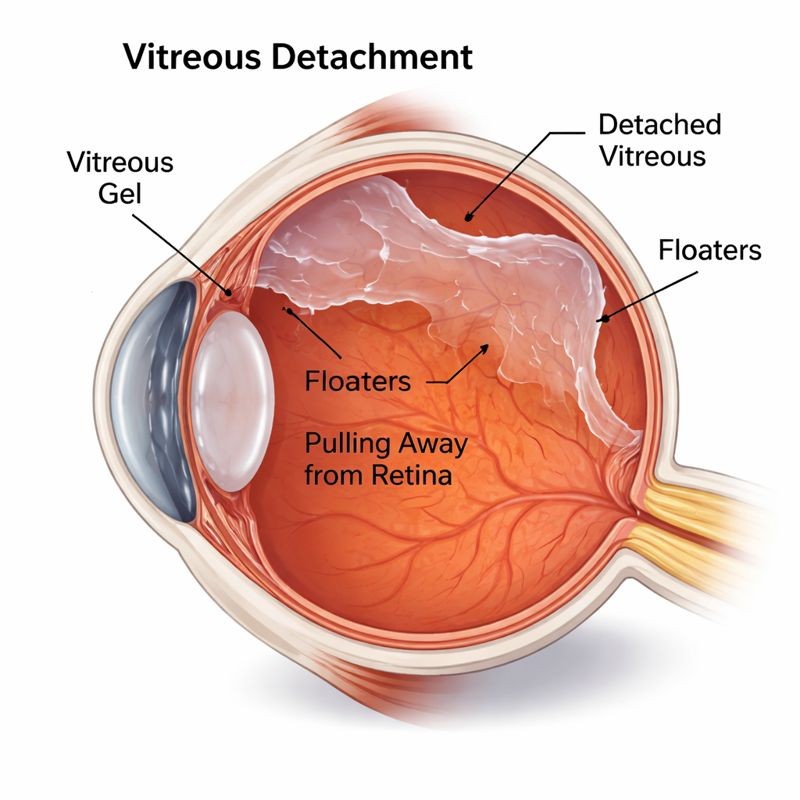
Getting your eyes checked without delay helps prevent serious complications like retinal tears or detachment. Most cases of vitreous detachment don’t require treatment, but monitoring ensures your eye health stays protected. Our experienced team of optometrists near you provides peace of mind and answers your questions about your vision.
See Clearly, Live Confidently—Schedule Your Eye Exam Today!
Don’t wait if you notice sudden changes in your vision. Contact Vision Theory Eyecare for a thorough examination and expert guidance for vitreous detachment in South Edmonton.